
Your Guide to Spotting Early Gum Disease
Discover how to protect your oral health by recognising the early symptoms of periodontal issues and taking preventative action.

The Foundation of a Healthy Smile
A truly beautiful smile is built on more than just bright, straight teeth. Like a house that requires a solid foundation to stand strong for decades, your teeth depend entirely on the health of your gums. This supportive tissue is the bedrock of your oral health, yet it is often overlooked until a problem arises. Periodontal disease, a condition affecting the gums, is incredibly common, but it is also largely preventable.
The initial stage, known as gingivitis, often develops without any discomfort. It is a quiet inflammation that can be completely reversed with the right professional care and attention at home. Understanding the importance of your gum health is the first step toward protecting your smile for life. It empowers you to be proactive, turning potential issues into preventable ones.
Recognising the First Subtle Warnings
Because the earliest stage of gum disease can be painless, learning to spot the subtle changes in your mouth is essential. These are not dramatic events but quiet signals that your gums need more support. Paying attention during your daily routine can help you catch these issues before they progress.
Here are the most common early signs of gum disease to watch for:
- Bleeding Gums: Seeing a trace of pink in the sink after you brush or floss is a primary indicator of inflammation. Many people assume this is normal, especially if they brush vigorously, but healthy gums should not bleed. This is often the first and most common warning sign of bleeding gums when brushing.
- Changes in Gum Appearance and Feel: Healthy gums are typically firm, resilient, and a pale pink colour. When inflammation is present, they may appear red, swollen, or puffy. They might also feel tender or sore to the touch, even if there is no significant pain.
- Persistent Bad Breath (Halitosis): We are not talking about the temporary odour from a morning coffee or a garlicky meal. This is a chronic, unpleasant taste or smell that lingers, even after brushing. It is often caused by the buildup of bacteria associated with the early stages of gum disease.
These symptoms are frequently mild enough to be dismissed. However, recognising them for what they are—your body’s request for attention—is a critical part of maintaining long-term oral health.
From Reversible Gingivitis to Lasting Damage
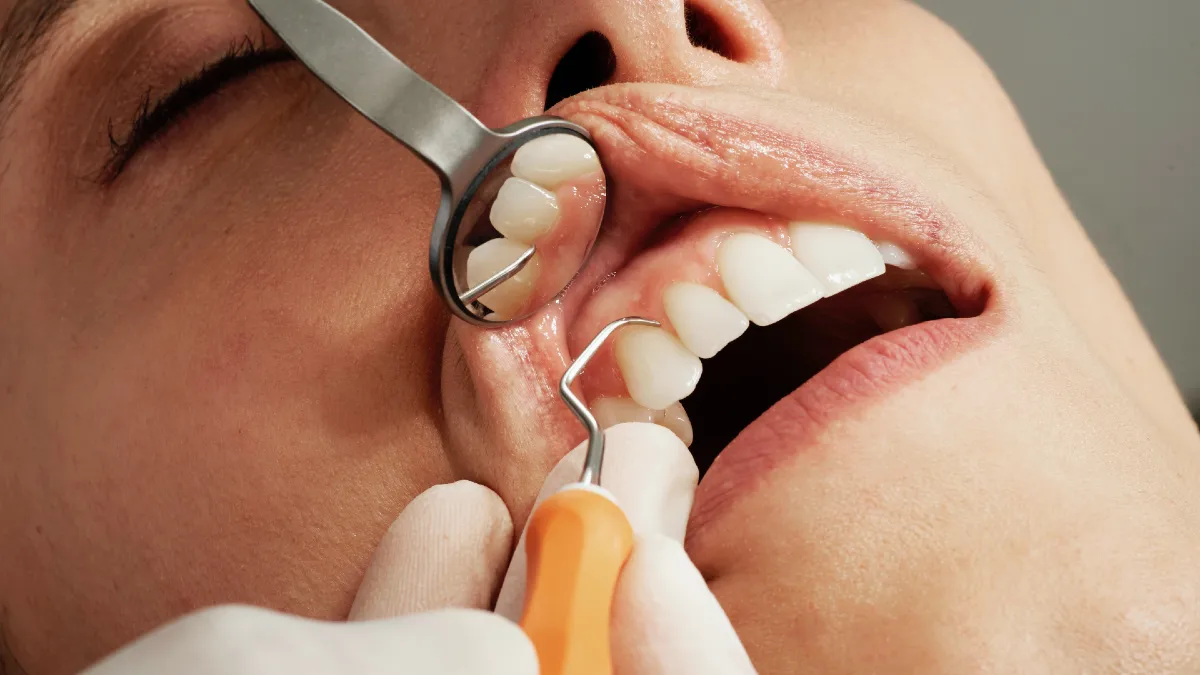
Understanding the progression of gum disease highlights the importance of early action. The condition exists on a spectrum, beginning with a completely reversible stage and advancing to one that causes permanent damage. The key is knowing the difference and acting before the problem escalates.
Gingivitis is the initial stage, characterised by inflammation caused by plaque buildup along the gumline. At this point, the infection has not yet reached the bone, and the condition is entirely reversible with professional cleaning and improved home care. This is the critical window for intervention. Knowing how to prevent gingivitis from advancing simply means addressing these early signs promptly.
If left untreated, gingivitis can progress to periodontitis. This is a more serious infection where the damage becomes irreversible. The bacteria begin to destroy the underlying bone and soft tissue that hold your teeth in place. This can cause gums to pull away, forming deep pockets that harbour more bacteria and lead to tooth mobility and eventual loss.
| Feature | Gingivitis (Early Stage) | Periodontitis (Advanced Stage) |
|---|---|---|
| Nature | Inflammation of the gums | Infection damaging gums and bone |
| Reversibility | Reversible with professional care and good hygiene | Damage is largely irreversible |
| Key Signs | Red, swollen gums; bleeding when brushing | Gum recession, deep pockets, loose teeth |
| Treatment Goal | Reverse inflammation and restore health | Manage the condition and prevent further damage |
The Importance of Professional Dental Check-ups
While awareness at home is vital, it is not a substitute for professional expertise. Since gum disease can develop silently, a partnership with your dentist is your strongest defence. Regular examinations allow for detection and intervention long before you might notice a problem on your own.
During a dental check up Ascot QLD, our clinicians do more than just look at your teeth. We perform a thorough assessment of your gum health, checking for any signs of inflammation. This includes using a special instrument to gently measure the space between your teeth and gums. These measurements help us identify any developing pockets that signal disease progression. Professional assessments are vital for early diagnosis.
Furthermore, a professional clean is essential for removing tartar, which is plaque that has hardened onto the teeth. This stubborn deposit cannot be removed with a toothbrush at home and provides a rough surface for more bacteria to accumulate. Removing it is a cornerstone of effective periodontal disease treatment Brisbane. At Arete Dental Studio, our comprehensive examinations are designed to identify these issues before they escalate, forming a proactive partnership in your oral health.
Building a Strong Defence with At-Home Care

Your daily habits are fundamental to preventing gum disease. An effective oral hygiene routine is not a chore but a powerful act of self-care that protects your health and preserves your smile. It is about using the right tools with the right technique, consistently.
- Correct Brushing Technique: Brush twice a day for a full two minutes. Use a soft-bristled toothbrush and fluoride toothpaste, making sure to angle the bristles at 45 degrees toward the gumline. This specific angle allows the bristles to clean the critical area where plaque accumulates most.
- The Necessity of Interdental Cleaning: Brushing alone can miss up to 40% of your tooth surfaces. Cleaning between your teeth every day with floss or interdental brushes is non-negotiable. This step removes plaque and food debris from areas your toothbrush cannot reach, particularly just under the gumline.
- Consider a Therapeutic Mouthwash: While not a replacement for brushing and flossing, an antiseptic or anti-plaque mouthwash can be a helpful addition to your routine. It can help reduce the bacterial load in your mouth and support overall gum health.
Every mouth is unique, and the ideal routine can vary. To create a routine perfectly tailored to your needs, you can schedule a smile consultation with our team to discuss the best approach for you.
How Lifestyle Choices Impact Your Gum Health
A holistic approach to oral health recognises that what happens in your body affects your mouth, and vice versa. Certain lifestyle choices can significantly increase your risk of developing gum disease or make an existing condition worse.
Smoking and vaping are among the most significant risk factors. They not only accelerate bone loss associated with periodontitis but also constrict blood vessels in the gums. This constriction can mask the early signs of gum disease, like bleeding, giving a false sense of health while the disease progresses undetected beneath the surface.
Systemic health conditions also play a major role. There is a well-established link between uncontrolled diabetes and periodontal disease, as it can make the body more susceptible to infection. Other factors, such as a diet high in sugar, chronic stress that impairs the immune system, and even certain medications, can influence your gum health. Sharing your full medical history with your dentist allows us to provide care that considers your overall wellbeing. A healthy foundation is the first step towards any smile enhancement, from professional whitening to porcelain veneers.
Tags
Where to Find Us
Located on Racecourse Road in Ascot, we proudly serve patients from Hamilton, Hendra, Clayfield, and across Brisbane. Our clinic is situated between Bendigo Bank and BOQ, with free 3P parking available underneath the Coles centre (accessed via Dobson St).