
Your Guide to Keeping Braces Clean Between Dental Visits
Learn the best techniques and tools to maintain excellent oral hygiene throughout your orthodontic treatment.
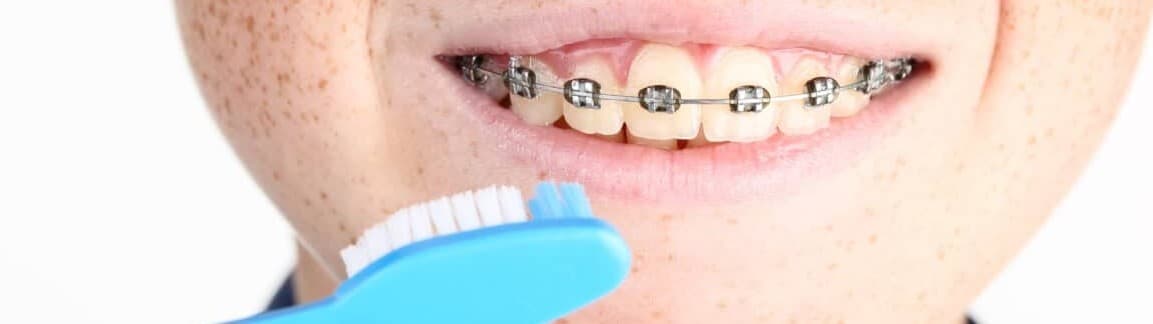
Protecting Your Investment in a Perfect Smile
Beginning orthodontic treatment is a significant step towards long-term health and confidence. Think of it as a collaborative partnership between you and your dental team. While we guide your smile’s transformation in the studio, your diligence at home is what truly protects this important investment. The primary challenge with braces is that the brackets and wires introduce new, intricate surfaces where plaque and food particles can easily accumulate.
Without consistent cleaning, this can lead to preventable issues like enamel demineralisation, which appears as white spots, as well as cavities and gum inflammation. Rather than seeing these as threats, view them as outcomes that your daily care routine is designed to prevent. By mastering a few simple techniques for keeping braces clean, you empower yourself to achieve not just a straight smile, but a brilliantly healthy one.
Assembling Your Orthodontic Care Toolkit
Effective oral hygiene with braces starts with having the right tools. It’s not about adding complexity, but about using specialised instruments designed to clean where a standard brush cannot reach. We recommend starting with a soft-bristled toothbrush, either manual or electric. The soft bristles are essential for cleaning gently around your appliance without damaging the brackets or irritating your gums.
Beyond the toothbrush, a few key aids will make your routine more effective. An interdental brush, also known as a proxy brush, is perfect for cleaning under the archwire and around the sides of each bracket. For flossing, a floss threader or orthodontic floss with a stiffened end is necessary to navigate under the wire. While supplementary tools like a therapeutic mouthwash or a water flosser can be beneficial for flushing away loose debris, they are not a substitute for the mechanical cleaning that brushing and flossing provide. These tools work together to ensure every surface is properly cared for.
| Tool | Primary Function | Technique Tip |
|---|---|---|
| Soft-Bristled Toothbrush | Removes plaque from tooth surfaces and around brackets | Use a 45-degree angle towards the gumline and bracket edges |
| Interdental Brush | Cleans underneath the archwire and between brackets | Use a gentle in-and-out motion; do not force into tight spaces |
| Floss Threader | Guides dental floss under the archwire | Thread about 45cm of floss through the loop for easy handling |
| Orthodontic Wax | Provides temporary relief from poking wires or brackets | Warm a small piece between your fingers before applying |
Mastering the Brushing Technique with Braces
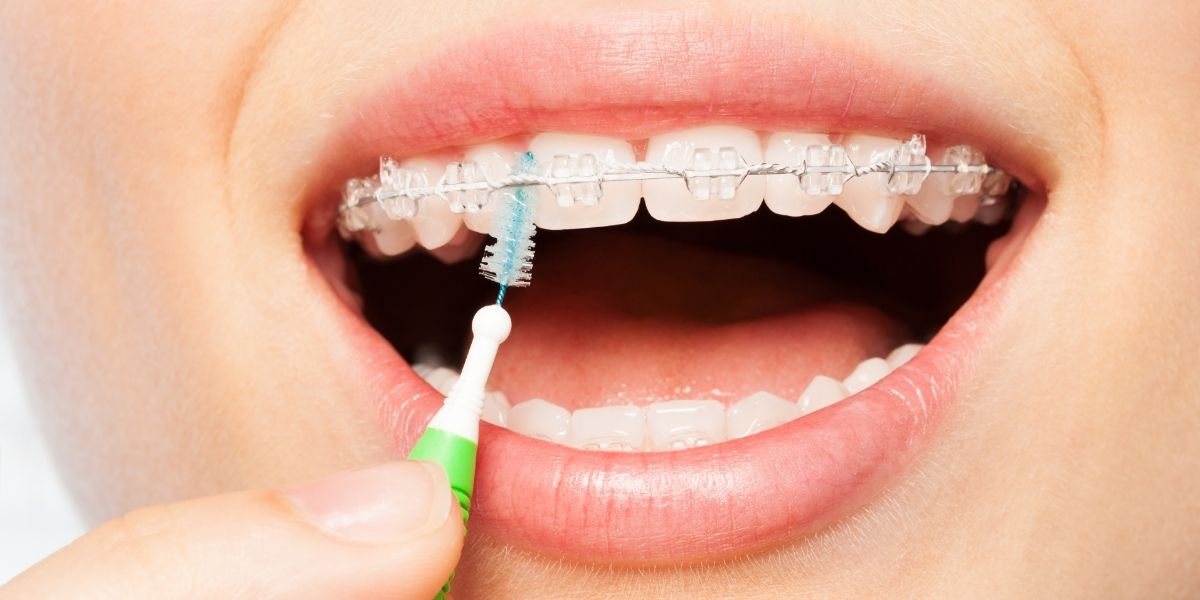
Knowing how to clean braces properly transforms a daily task into a powerful protective measure. The goal is to be thorough yet gentle, ensuring you clean every surface without applying excessive force. With a little practice, this methodical approach will become second nature.
- Start with a Rinse: Before you begin brushing, rinse your mouth vigorously with water. This simple step helps to dislodge and wash away any loose food particles trapped in your braces, making the subsequent brushing more effective.
- Angle Your Brush: Using a soft-bristled brush, approach your teeth at a 45-degree angle. Angle the bristles down from above to clean the top of each bracket, then angle the bristles up from below to clean the bottom. Use small, gentle circular motions to clean the front surfaces of your teeth and the brackets themselves.
- Be Methodical and Thorough: Dedicate at least two minutes to brushing. Work your way around your mouth, ensuring you clean the outer, inner, and chewing surfaces of every tooth. We recommend brushing after every meal to prevent food from sitting in your braces for extended periods.
- Detail with an Interdental Brush: Once you’ve finished with your main toothbrush, use an interdental brush. Gently guide it under the archwire and between each bracket. Use a careful in-and-out motion to remove any plaque or debris your toothbrush couldn't reach. This meticulous approach is supported by professional bodies like the American Association of Orthodontists, which provides resources that reinforce these cleaning habits.
While this routine becomes second nature with braces, it’s worth noting that other orthodontic solutions have different care requirements. For instance, the removable nature of our clear aligners offers a different approach to oral hygiene during treatment.
A Practical Approach to Flossing with Braces
We understand that flossing with braces can seem daunting at first, but it is an absolutely essential step for preventing cavities between your teeth. With a bit of practice, the process becomes much quicker and easier. It’s a skill that directly contributes to the health and beauty of your final result.
Here is a simple method using a floss threader:
- Prepare Your Floss: Take a piece of dental floss about 45cm long and thread it through the loop of the floss threader.
- Guide the Floss: Carefully guide the stiff end of the threader under your archwire, pulling the floss through with it.
- Clean Each Tooth: Gently slide the floss up and down the side of one tooth, making sure to go slightly below the gumline. Then, do the same for the adjacent tooth before removing the floss.
- Repeat: Pull the floss out and repeat the process for the next pair of teeth, working your way around your entire mouth.
A water flosser can be a powerful supplement to this routine, as it is excellent for flushing debris from around brackets and stimulating the gums. However, it does not replace the mechanical action of string floss, which is needed to remove sticky plaque from between the teeth. This commitment to a daily routine is the foundation of a successful outcome. It’s this same focus on long-term health and planning that we bring to every patient journey, beginning with a comprehensive smile consultation.
Smart Food Choices for a Trouble-Free Treatment

The food you eat during orthodontic treatment plays a crucial role not only in preventing decay but also in protecting your braces from damage. Broken brackets or bent wires can cause discomfort and may lead to delays in your treatment timeline. The key is to focus on smart choices rather than restrictions. Knowing which food to avoid with braces is as important as knowing which foods are safe.
Foods to Avoid or Eat with Caution:
- Hard Foods: Hard lollies, nuts, popcorn, and chewing on ice can easily break a bracket.
- Sticky Foods: Caramels, chewy muesli bars, and toffees can get stuck in your braces and are difficult to clean away.
- Tough Foods: Biting into hard-crusted bread, tough meats, or corn on the cob can damage your appliance.
Brace-Friendly Alternatives:
- Soft Fruits and Vegetables: Bananas, berries, smoothies, yoghurt, and steamed or soft-cooked vegetables are excellent choices.
- Tender Meats and Fish: Chicken, fish, and minced meat are easy to chew.
- Grains and Soups: Soft-cooked rice, pasta, and soups are both safe and comforting.
A practical tip for enjoying healthier hard foods like apples or carrots is to cut them into small, bite-sized pieces instead of biting directly into them. This simple adjustment allows you to maintain a balanced diet without risking damage to your braces.
When to Contact Your Dentist Between Appointments
Even with the most careful approach, minor issues can sometimes arise during your orthodontic treatment. Knowing how to respond and when to contact us is part of the process. Your comfort and the integrity of your appliance are our priorities.
Please give our studio a call if you experience any of the following:
- A broken or loose bracket that has detached from a tooth.
- A poking wire that is causing significant irritation to your cheek or gums.
- A lost ligature, which is the small elastic that holds the wire to the bracket.
For minor discomfort from a sharp edge, you can temporarily cover the area with a small piece of orthodontic wax until you can see us. Our team is your dedicated partner throughout this journey. For any concerns about your treatment or for exceptional dental care in Ascot, please reach out to us at Arete Dental Studio.
Tags
Where to Find Us
Located on Racecourse Road in Ascot, we proudly serve patients from Hamilton, Hendra, Clayfield, and across Brisbane. Our clinic is situated between Bendigo Bank and BOQ, with free 3P parking available underneath the Coles centre (accessed via Dobson St).