
Five Subtle Signs of Tooth Decay You Shouldn't Ignore
Discover the subtle warnings of a cavity and understand the modern dental treatments available to restore your smile.
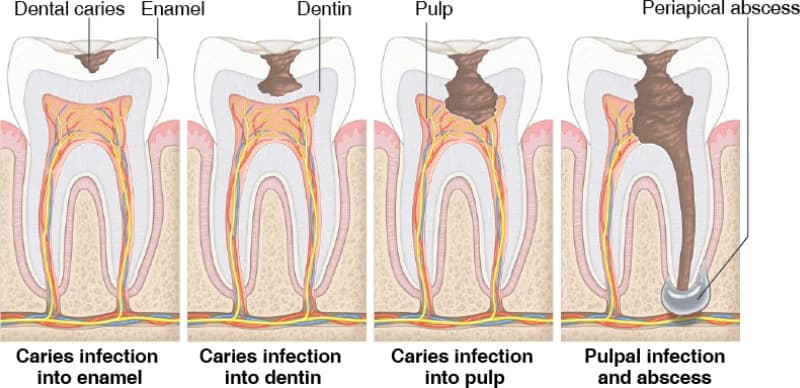
Understanding the Early Stages of Tooth Decay
Dental decay, or caries, is one of the world's most common health conditions, yet its arrival is often completely silent. It doesn't appear overnight. Instead, tooth decay is a gradual process that begins when acids produced by bacteria start to dissolve the minerals in our tooth enamel. This initial stage, known as demineralisation, is a quiet warning.
Recognising the early signs of a cavity presents a valuable opportunity. It allows for conservative treatments that work in harmony with your tooth's natural structure, a principle at the heart of biomimetic dentistry. Rather than waiting for a problem to become severe, early detection lets us preserve the healthy parts of your tooth. The first indicators are often subtle, easily missed in our busy lives, but paying attention to them is the first step in maintaining a healthy, resilient smile.
The Five Key Indicators of a Developing Cavity
While the beginning of a cavity can be invisible, your body often sends quiet signals as the decay progresses. Learning to recognise these indicators can help you seek care before a small issue becomes a complex problem. Here are five key signs to watch for.
1. Lingering Tooth Sensitivity
We’ve all felt a brief twinge from a cold drink. But when that sensitivity to hot, cold, or sweet foods lingers long after the food is gone, it’s a different story. This happens because as enamel wears away, it exposes the underlying dentin layer. This layer is filled with thousands of microscopic tubules that lead directly to the tooth's nerve. When you wonder what does a cavity feel like, this persistent, localised sensitivity is often one of the first noticeable sensations.
2. A Dull or Sharp Toothache
Pain is your body’s most direct alert system. A toothache related to decay can range from a spontaneous, dull ache that comes and goes without any obvious trigger to a sharp, sudden pain that stops you in your tracks. This discomfort is a clear signal that the decay is advancing, moving deeper into the tooth and getting closer to the sensitive pulp tissue at its core. Ignoring this pain allows the condition to worsen, potentially leading to more significant issues.
3. Visible Spots or Pits on Your Teeth
Sometimes, the evidence is something you can see. The earliest visual sign is often a chalky white spot on the tooth’s surface, indicating an area of mineral loss. If left unaddressed, this spot can progress to a light brown, dark brown, or even black stain. Eventually, the weakened enamel can collapse, forming a small hole or pit that you might feel with your tongue. These spots are most commonly found on the chewing surfaces of your molars or near the gumline.
4. Pain When Biting Down
If you experience a sharp pain specifically when you bite down on food, it can be a sign of a cavity. This focused pressure on a structurally weakened tooth can cause significant discomfort. The pain may indicate that the decay has progressed enough to cause inflammation in the pulp or the ligaments surrounding the tooth’s root. It’s a specific type of pain that points directly to a problem with the tooth’s integrity.
5. Persistent Bad Breath or an Unpleasant Taste
A cavity creates a perfect hiding spot for food particles and bacteria. As these bacteria break down the trapped debris, they release volatile sulfur compounds, which are the primary cause of halitosis, or bad breath. If you notice a persistent bad taste in your mouth or that your breath isn't fresh even after brushing and flossing, it could be due to an underlying cavity that is harbouring bacteria. This is a sign that goes beyond simple oral hygiene.
The Diagnostic Process for Pinpoint Accuracy

While the five signs are useful clues, they are only part of the story. A precise diagnosis is essential to crafting the right treatment plan. Think of it like a master jeweller examining a precious gem. They don't just glance at it; they use specialised tools to understand its every facet. We approach diagnostics with the same meticulous care to determine the exact size, position, and depth of a cavity.
Our diagnostic toolkit allows us to see what the naked eye cannot. This ensures that our treatment is perfectly tailored to your needs. These tools include:
- High-magnification intraoral cameras that allow both you and your dentist to see the tooth’s surface in incredible detail on a screen, making any issues clear and understandable.
- Digital X-rays (radiographs) which are essential for revealing decay hidden between teeth, beneath existing fillings, or deep within the tooth structure.
- Pulp vitality tests to gently assess the health of the tooth’s nerve, helping us determine if the decay has reached the pulp chamber.
This thorough assessment is critical for effective treatment. As confirmed by leading health authorities like the Mayo Clinic, a combination of visual inspection and advanced imaging is the standard for an accurate diagnosis. For an Ascot dentist for cavities, this level of precision is not an exception, it is our standard of care. Our experienced professionals are skilled in using these advanced diagnostic tools to ensure every detail is accounted for. You can learn more about the expertise of our team here.
Tailoring Your Treatment to the Diagnosis
Once we have a complete picture of the tooth’s condition, we can determine the most appropriate course of action. Our guiding principle is biomimetic, meaning we aim to preserve as much of your healthy, natural tooth structure as possible. The findings from our diagnostic process directly inform which of the available tooth decay treatment options is best suited for you.
A small area of decay caught early might only require a minimally invasive composite filling, designed to blend seamlessly with your natural tooth. For more extensive damage where the tooth's structure is compromised, a stronger, custom-made restoration like an inlay, onlay, or a full crown may be necessary to provide reinforcement and protection. In cases where diagnostics confirm the nerve has become infected, root canal therapy becomes a vital procedure to save the tooth from extraction. It is a restorative treatment designed to eliminate infection and preserve your natural smile.
This table illustrates how the treatment approach is directly determined by the extent of the decay, ensuring the most conservative and effective solution is chosen.
| Stage of Decay | Primary Goal | Common Treatment Solution |
|---|---|---|
| Early Stage (Demineralisation) | Halt and reverse mineral loss | Fluoride treatment, improved home care |
| Small Cavity (Enamel/Dentin) | Remove decay and restore tooth shape | Minimally invasive composite filling |
| Large Cavity (Significant Structure Loss) | Remove decay and reinforce the tooth | Custom-made inlay, onlay, or crown |
| Advanced Decay (Pulp Infection) | Save the tooth and eliminate infection | Root canal therapy followed by a crown |
Understanding your options is the first step towards restoring your smile. We invite you to book a comprehensive smile consultation to discuss a personalised plan.
Proactive Care for a Healthy Smile

The most effective way to manage tooth decay is to prevent it from starting. At Arete Dental Studio, we see ourselves as your partners in long-term oral health, empowering you with the knowledge to maintain a healthy smile for life. Simple, consistent habits make all the difference.
A proactive approach includes:
- Effective home care with proper brushing and flossing techniques to remove plaque daily.
- Mindful consumption of sugary and acidic foods and drinks, which fuel decay-causing bacteria.
- Staying hydrated, especially with water, which helps rinse away food particles and neutralise acids.
Regular dental check-ups are fundamental to this proactive approach. They are not just for addressing existing problems but are crucial for identifying the early signs of tooth decay Brisbane residents might face before they become serious. At Arete Dental Studio, we believe exceptional care should be accessible. We offer several affordable dental packages to support your oral health journey. If you recognise any of the signs discussed or are simply due for a check-up, we welcome you to schedule a visit for a comprehensive assessment. Visit us to learn more.
Tags
Where to Find Us
Located on Racecourse Road in Ascot, we proudly serve patients from Hamilton, Hendra, Clayfield, and across Brisbane. Our clinic is situated between Bendigo Bank and BOQ, with free 3P parking available underneath the Coles centre (accessed via Dobson St).